Strong business finance strategies help business owners make these decisions with greater confidence instead of relying on assumptions.
Financial management becomes especially important when a company begins growing. More customers can mean higher revenue, but growth can also create additional payroll expenses, inventory requirements, marketing costs, taxes, and financing needs. A business can appear successful from the outside while experiencing serious financial pressure behind the scenes. That is why entrepreneurs should pay attention to profitability, cash flow, debt, budgeting, and financial risk at the same time.
You do not need to become an accountant to manage your company effectively. However, understanding a few fundamental financial principles can help you identify problems earlier and make better decisions about hiring, pricing, expansion, borrowing, and investment. The following strategies provide a practical foundation for building a financially stronger and more sustainable business.
Why Business Finance Strategy Matters
A business finance strategy provides a framework for deciding how company money should be earned, managed, saved, borrowed, and reinvested. Think of it as the financial navigation system for your business. Revenue tells you how much the company is selling, but financial strategy helps determine whether those sales are actually creating sustainable value.
Businesses regularly face changing costs, customer demand, competition, financing conditions, and unexpected expenses. Without financial planning, even a profitable company can experience periods when there is not enough available cash to cover payroll, suppliers, rent, taxes, or loan payments. Entrepreneurs who monitor their finances regularly have more time to identify these problems and respond before they become emergencies.
Financial planning also supports growth. Before hiring employees, opening another location, launching a product, or purchasing equipment, entrepreneurs should understand the expected costs and potential financial return. Decisions become much easier when they are supported by reliable financial information rather than optimism alone.
Separate Personal and Business Finances
One of the first financial steps every entrepreneur should take is separating personal finances from business finances. Mixing the two may seem convenient when a company is small, but it can quickly create confusing records and make it difficult to understand the actual financial condition of the business.
Using appropriate business banking and payment accounts allows revenue and expenses to be tracked more accurately. Customer payments can enter the business account while legitimate business expenses are paid from the same financial system. This creates a much clearer transaction history for bookkeeping, budgeting, tax preparation, and financial reporting.
Clear financial separation also helps entrepreneurs understand how much money is actually available. A bank balance may look healthy, but some of that money could already be required for supplier invoices, taxes, payroll, or debt repayments. Organized accounts make it easier to distinguish available operating cash from money that is already committed.
Build a Realistic Business Budget
A business budget provides a financial plan for expected revenue and expenses. It helps entrepreneurs determine how much they can reasonably spend while maintaining enough resources to operate the business. Instead of viewing a budget as a restriction, think of it as a tool that helps direct money toward the company's most important priorities.
Begin by estimating realistic revenue. Existing businesses can review historical sales, seasonal patterns, customer behavior, and current contracts. New businesses can create conservative, expected, and optimistic scenarios. Using several scenarios can be more useful than assuming everything will follow one perfect forecast.
Expenses should then be divided into useful categories. Fixed costs may include rent, insurance, software subscriptions, and certain salaries. Variable costs can change depending on sales or production. Entrepreneurs should also account for irregular expenses such as equipment repairs, annual subscriptions, professional services, and marketing campaigns.
Use Rolling Financial Forecasts
An annual budget provides direction, but businesses rarely operate exactly as expected for an entire year. Customer demand changes, suppliers adjust prices, employees are hired, advertising costs fluctuate, and new opportunities appear. A rolling financial forecast allows entrepreneurs to update their expectations as new information becomes available.
For example, the business can review actual results every month and update its forecast for the next six or twelve months. If sales are lower than expected, management can immediately evaluate the effect on cash flow, hiring, marketing, inventory, and investment plans.
Forecasts should be based on measurable assumptions whenever possible. Revenue growth might be connected to customer numbers, conversion rates, contracts, average order values, or production capacity. When those assumptions change, the forecast should change with them.
Master Cash Flow Management
Cash flow management is one of the most important financial skills for entrepreneurs because profit does not automatically mean that cash is available. A company can make a profitable sale today but wait weeks or months before receiving the customer's payment. During that period, salaries, rent, suppliers, and other expenses may still need to be paid.
Entrepreneurs should therefore monitor when money is expected to enter and leave the business. Knowing upcoming customer payments, payroll dates, supplier bills, debt repayments, tax obligations, and other major expenses makes it easier to identify potential cash shortages before they occur.
Early detection creates options. A company may be able to collect invoices faster, negotiate supplier terms, postpone a nonessential purchase, adjust inventory orders, reduce unnecessary expenses, or arrange suitable financing. Discovering the same cash shortage immediately before an important payment is due provides far fewer choices.
Create a Cash Flow Forecast
A cash flow forecast estimates how much money will enter and leave the business during a specific period. Depending on the company, entrepreneurs may create weekly or monthly forecasts covering several months ahead.
Start with the available cash balance. Add expected customer payments, cash sales, financing proceeds, and other incoming funds. Then subtract payroll, rent, supplier payments, inventory purchases, marketing expenses, taxes, subscriptions, debt repayments, and other expected outflows.
Compare your forecast with actual results regularly. If customers consistently pay later than expected or operating expenses repeatedly exceed estimates, update future assumptions. The purpose of forecasting is not to predict every dollar perfectly. Its purpose is to provide enough visibility to make better decisions before financial pressure develops.
Improve Accounts Receivable Management
Making a sale is only part of the financial process. If customers do not pay on time, the business may struggle to convert revenue into usable cash. Entrepreneurs that invoice customers should therefore develop a consistent accounts receivable strategy.
Send invoices promptly and make sure payment terms are easy to understand. Provide convenient payment options where appropriate and follow up on overdue invoices consistently. Automated reminders can reduce administrative work while helping customers remember upcoming or overdue payments.
Businesses should also review receivables according to how long invoices have remained unpaid. An increasing number of older outstanding invoices can indicate a collection problem. Monitoring this information allows entrepreneurs to respond before overdue balances become a serious cash-flow issue.
Understand Revenue, Profit, and Cash Flow
Revenue, profit, and cash flow are closely related, but they represent different parts of business performance. Revenue generally represents income generated from sales before relevant expenses are deducted. Profit represents what remains after applicable expenses are accounted for. Cash flow tracks actual cash moving into and out of the business.
Consider a business that records $100,000 in sales during a month. If its recognized expenses are $80,000, it may appear to have generated $20,000 in profit. However, if a large percentage of customers have not paid their invoices yet, the business may still experience a shortage of available cash.
This is why entrepreneurs should not judge business health based solely on sales. Revenue growth looks impressive, but growth that produces weak margins or consistently negative cash flow may not be sustainable. Understanding all three measures provides a much more complete view of financial performance.
Know Your Break-Even Point
The break-even point represents the level of sales required to cover the relevant fixed and variable costs of operating the business. Understanding this number can help entrepreneurs create realistic sales targets and evaluate pricing decisions.
Suppose a product sells for $100 and has a variable cost of $60. The contribution margin would be $40. If the company has $20,000 in monthly fixed costs, it would need to sell approximately 500 units to cover those costs under this simplified example.
Break-even analysis can also reveal the impact of discounts. Reducing prices may attract additional customers, but it also reduces the contribution generated from each sale. The company may need a surprisingly large increase in sales volume to generate the same level of profit. Modeling the numbers before changing prices helps entrepreneurs avoid expensive assumptions.
Build an Emergency Cash Reserve
Every business faces unexpected events. Equipment may fail, a major customer could leave, demand might temporarily decline, or an important payment could arrive later than expected. An emergency business fund gives the company additional time to respond without immediately depending on expensive borrowing.
There is no single reserve amount suitable for every business. Entrepreneurs should calculate essential monthly operating expenses and consider the stability of revenue, customer concentration, seasonality, financing access, and industry risk.
Businesses can build reserves gradually by allocating a portion of available cash or profits to a separate reserve. Establish clear rules for when the money can be used. A genuine interruption to business operations may justify accessing the reserve, while optional equipment upgrades or unnecessary office improvements generally should not.
Use Business Debt Strategically
Business debt is not automatically a sign of poor financial management. Used carefully, borrowing can help entrepreneurs purchase equipment, finance inventory, expand operations, or manage temporary working-capital requirements. The important question is whether the debt is expected to create enough economic value to justify its cost and risk.
Before borrowing, entrepreneurs should understand exactly how the funds will be used and how repayments will be made. Borrowing to finance equipment that improves productive capacity is fundamentally different from repeatedly taking loans because normal business operations cannot cover regular expenses.
Compare financing based on more than the advertised interest rate. Review fees, repayment schedules, collateral requirements, personal guarantees, variable interest rates, early repayment conditions, and total borrowing costs. The company should also model whether it could continue meeting repayments if revenue temporarily fell below expectations.
Choose the Right Business Financing
Entrepreneurs may have access to several types of business financing, including retained earnings, owner capital, bank loans, credit lines, equipment financing, supplier credit, and outside investment. Each financing method comes with different costs, risks, and obligations.
The financing structure should match the purpose of the money. Short-term working-capital needs may require a different solution from purchasing an asset expected to remain productive for many years. Matching the duration of financing with the expected economic life of the investment can help reduce financial pressure.
Entrepreneurs should compare multiple appropriate financing options rather than automatically accepting the fastest source of money. Consider the total repayment amount, interest and fees, payment frequency, collateral, ownership implications, flexibility, and consequences if the business performs below expectations.
Monitor Important Financial KPIs
Modern businesses can track hundreds of metrics, but entrepreneurs do not need hundreds of numbers to understand financial health. A focused set of financial KPIs can provide much more useful information.
Important indicators may include revenue growth, gross profit margin, operating profit, available cash, projected cash balances, accounts receivable, inventory turnover, debt obligations, and customer concentration. The right metrics depend on the business model.
Entrepreneurs should establish a regular financial review schedule. Weekly reviews can focus on cash balances, collections, bills, and unusual transactions. Monthly reviews can examine profit and loss, the balance sheet, budget-versus-actual performance, margins, and forecasts. Quarterly reviews can focus on larger strategic questions such as pricing, investment, financing, and expansion.
Control Business Costs Without Hurting Growth
Cost control does not mean cutting every expense. The objective should be to eliminate unnecessary spending while protecting expenses that generate revenue, improve productivity, reduce risk, or strengthen customer experience.
Review recurring subscriptions, software tools, supplier agreements, transaction fees, storage costs, marketing expenditure, and administrative services. Small recurring expenses can become significant when they accumulate across dozens of services.
Evaluate expenses based on the value they create rather than their size alone. A marketing campaign costing thousands of dollars may be worthwhile if it consistently attracts profitable customers. An inexpensive subscription that nobody uses creates little value regardless of how small the monthly charge appears.
Plan for Business Taxes Early
Business tax planning should happen throughout the year rather than shortly before a filing deadline. Tax obligations vary depending on location, business structure, payroll, income, and other factors, so entrepreneurs should understand the requirements that apply to their businesses.
Maintain organized financial records and keep money intended for taxes separate from normal operating funds where appropriate. A large bank balance can create a false impression of available cash if part of that money will eventually need to be paid in taxes.
Major business decisions can also have tax implications. Purchasing equipment, hiring employees, changing legal structures, distributing profits, or selling business assets may affect tax obligations. Working with a qualified tax professional can be valuable when the company's finances become more complicated.
Protect Your Business Against Financial Risk
Every business operates with some level of financial risk. Entrepreneurs should identify events that could significantly damage operations and decide how those risks can be avoided, reduced, transferred, or financially absorbed.
Depending on the type of business and local requirements, appropriate insurance may help protect against certain losses. Businesses should also consider operational risks such as dependence on a single supplier, excessive customer concentration, payment fraud, cybersecurity incidents, equipment failure, or the loss of important data.
Financial controls can reduce many of these risks. Reconcile accounts regularly, restrict access to payment systems, establish approval processes for significant expenses, maintain backups of important records, and review unusual transactions. A few simple controls can prevent surprisingly expensive problems.
Reinvest Business Profits Strategically
When a business generates profit, entrepreneurs must decide how that money should be used. Potential choices include hiring employees, purchasing equipment, increasing marketing, developing products, reducing debt, building cash reserves, or distributing some of the profit to owners.
Reinvestment should have a clear business purpose. Spending money on growth does not automatically create profitable growth. Before making a significant investment, estimate the expected financial benefit, implementation cost, timeline, and major risks.
Compare potential investments against each other. Money spent on one project cannot simultaneously fund another opportunity. This makes capital allocation one of the most important responsibilities of an entrepreneur. The goal is to direct limited financial resources toward opportunities that best support sustainable business objectives.
Build a Financial System That Can Scale
Informal financial processes may work when a business is extremely small, but they become increasingly risky as the company grows. Entrepreneurs should gradually develop repeatable systems for bookkeeping, invoicing, collections, payments, payroll, budgeting, reporting, and financial review.
Appropriate accounting software can automate many repetitive processes, but technology should support a well-designed financial process rather than replace one. Establish clear procedures first and then automate tasks where doing so improves accuracy and efficiency.
As complexity increases, consider professional support from a bookkeeper, accountant, CPA, tax professional, or financial adviser where appropriate. The objective is to create reliable financial information that does not depend entirely on the founder remembering every transaction.
Conclusion
Successful financial management is not about memorizing complicated formulas. The most effective business finance strategies every entrepreneur should know are built around understanding cash, controlling expenses, maintaining accurate records, planning ahead, and making financial decisions based on evidence.
Start by separating business and personal finances. Create a realistic budget, forecast cash flow, monitor receivables, understand profitability, calculate your break-even point, and maintain appropriate financial reserves. When borrowing money, understand the complete cost and make sure the financing supports a clearly defined business objective.
Financial discipline gives entrepreneurs something extremely valuable: options. Healthy cash flow gives you more time to make decisions. Strong profitability provides resources for investment. Manageable debt creates flexibility. Reliable financial information makes it easier to identify both problems and opportunities. Build these habits early, review them regularly, and your financial system can become a foundation for sustainable long-term growth.
Frequently Asked Questions About Business Finance
1. What is the most important financial strategy for entrepreneurs?
One of the most important strategies is maintaining clear visibility over business cash flow. Entrepreneurs should know how much cash is currently available, which customer payments are expected, what bills are approaching, and how much the company normally spends each month. Separating personal and business finances, maintaining accurate records, and reviewing financial performance regularly provide the foundation for better decisions.
2. How can a small business improve cash flow?
Small businesses can improve cash flow by sending invoices promptly, following up on overdue accounts, managing inventory carefully, reviewing unnecessary recurring expenses, negotiating appropriate supplier terms, and maintaining a cash-flow forecast. The objective is to improve the timing and reliability of incoming cash while managing outgoing payments responsibly.
3. How much emergency cash should a business keep?
There is no universal amount that works for every business. The appropriate reserve depends on essential monthly expenses, revenue stability, customer concentration, seasonality, industry conditions, and access to financing. Entrepreneurs should calculate the expenses that would continue during a temporary revenue disruption and establish a reserve target based on their company's specific financial risks.
4. Is taking a business loan a good financial strategy?
A business loan can be useful when borrowed funds support a productive purpose and the company can comfortably manage repayments. Financing equipment, inventory, working capital, or expansion may make sense when the expected financial benefits justify the borrowing costs. Entrepreneurs should compare interest rates, fees, repayment terms, collateral requirements, and total borrowing costs before accepting financing.
5. Which financial reports should entrepreneurs review?
Entrepreneurs should understand their income statement, balance sheet, and cash-flow information. These reports provide different perspectives on profitability, assets, liabilities, equity, and available cash. Businesses can also monitor relevant financial KPIs such as gross margin, accounts receivable, inventory turnover, debt obligations, operating expenses, and projected cash balances.
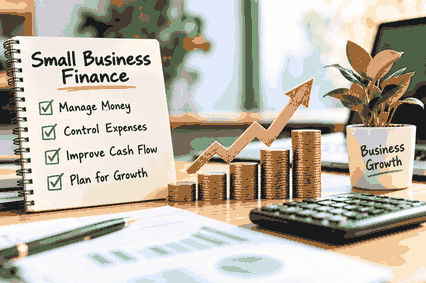
- Small Business Finance: Manage Money & Grow Your Business
-
 Health - 02:52:34pm 30-09-2026

- Business Finance Strategies Every Entrepreneur Should Know
-
Health - 02:44:54pm 30-09-2026
-
 Universal
Should I Hire a Lawyer for a Minor Car Accident A Complete Guide to Protecting Your Rights
Universal
Should I Hire a Lawyer for a Minor Car Accident A Complete Guide to Protecting Your Rights
-
 Universal
History of Tangail Zilla in Bangladesh: Ancient Past, British Era, Zamindar Heritage, and Modern Development
Universal
History of Tangail Zilla in Bangladesh: Ancient Past, British Era, Zamindar Heritage, and Modern Development
-
 Universal
The Coverage Included in an Automobile Insurance Policy Weegy A Complete Guide for Drivers
Universal
The Coverage Included in an Automobile Insurance Policy Weegy A Complete Guide for Drivers
-
Business finance
Small Business Finance: Manage Money & Grow Your Business
-
 Technology
Top Technology Trends to Watch in 2026
Technology
Top Technology Trends to Watch in 2026